Our First Oberhasli goats

Editor's note from the Long Creek Farm owner Robby: It was brought to our attention that our previous post on this topic (while trying to make some observations regarding the goats) contained inaccuracies regarding the previous home for these goats. It was never our intention to purposefully state things that are inaccurate or misleading and will continue to strive to provide helpful tips and updates regarding our farm.

We recently added two 7-month-old Oberhasli goats to our herd; we plan on milking them in the spring and are hoping they will give a good amount of milk.
Their owners told us that her goats give around a gallon a day in the spring, one of our Nigerians, Mamie, gives close to that amount but it has been so hard to find more good milking Nigerians that we just decided to give this breed a try.
Mamie is the horned adult in the pictures above, interestingly she has almost identical markings to the Oberhasli's, the only difference being her patches of white on her side, tail and leg.
We had to get dehorned Oberhasli's since they are so rare around here that we could not find horned doelings.

In the spring we will be offering their babies for sale which will be 50% Nigerian 50% Oberhasli.
For some reason the two new goats will eat almost any plant in any growth stage whereas our Nigerians will not usually eat poison ivy, tough grass, etc. This will help to diversify our herd in an extended range of plants they will eat. We are especially excited that they may make an impact on our poison ivy.
Since the grass is not growing anymore we are keeping our herd in a large, wooded pen and feeding them hay, even though this is not the best food for the new goats since they are growing, they have still gained weight and hopefully will be good and ready for the cold winter months.
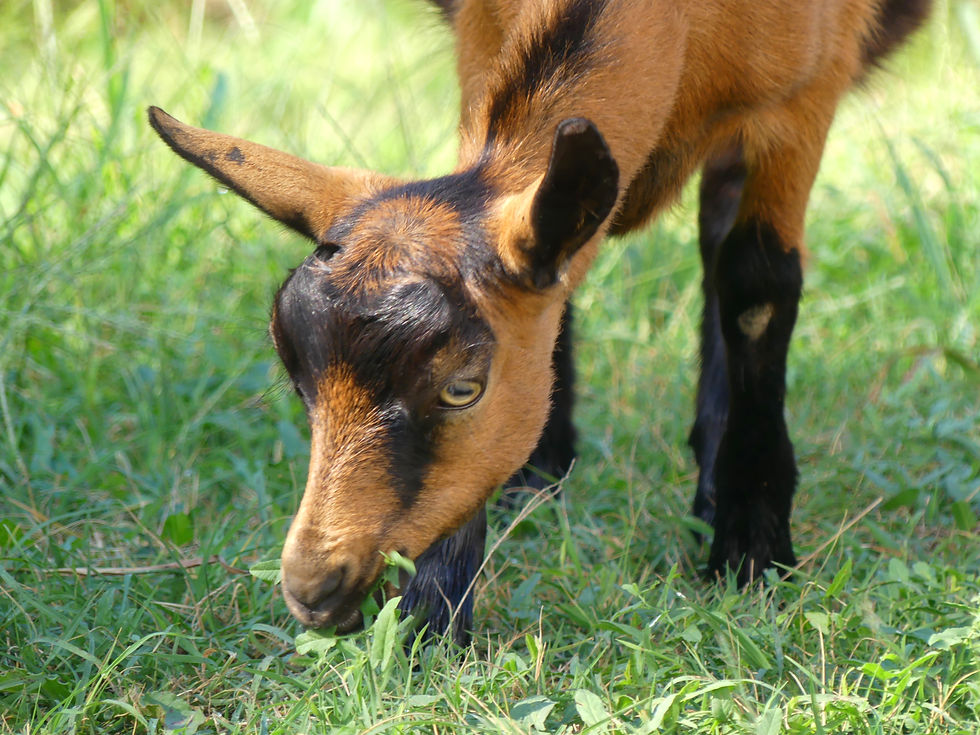
This breed is larger than Nigerians but they are not considered a large breed, they will probably be a few inches taller than Mamie and Rose our two largest Nigerians which means they will be stronger (which could make them a lot harder to handle, especially since they don't have any horns to use as handles) but hopefully they will be good milkers and we can have a few good milking goats instead of lots of half good milkers.


Comments